Eko Health is transforming cardiovascular and pulmonary care by combining digital stethoscope hardware with AI-powered analysis to detect early-stage disease faster and more accurately
Clinicians regularly miss early signs of structural heart disease or subtle abnormalities because traditional auscultation is subjective and limited. Early detection in primary care can significantly improve patient outcomes — but only with the right diagnostic support.
• Heart and lung disease remain the leading causes of death globally.
• Clinicians lacked scalable, objective tools for early detection during routine exams.
• Traditional stethoscopes provide limited diagnostic insight, leading to delayed treatment.
Solution
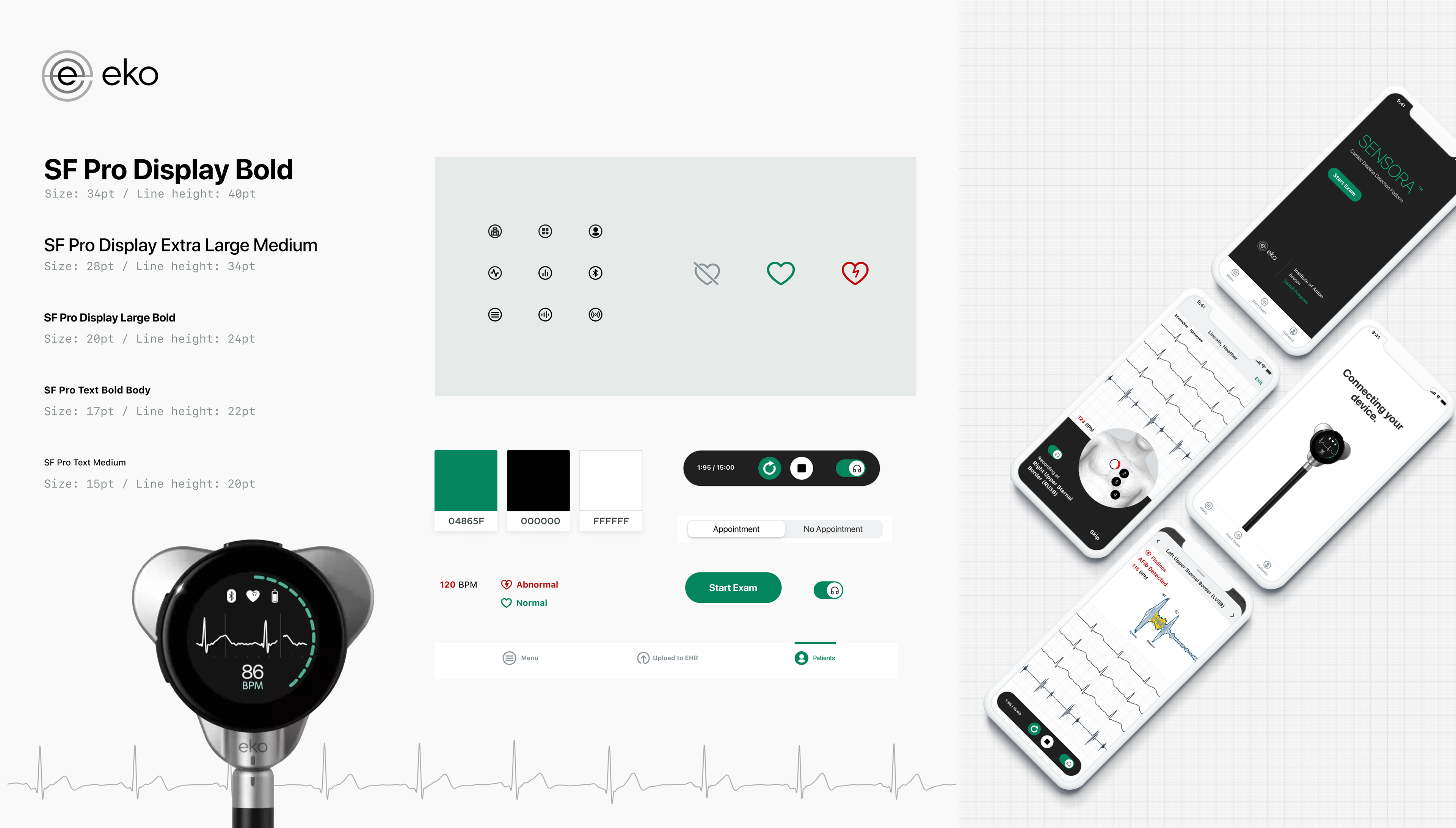
• Eko’s digital stethoscopes + AI platform (e.g., SENSORA®) augment routine exams with high-fidelity sound, waveform visualization, and AI alerts.
• Seamless integration into clinical workflows.
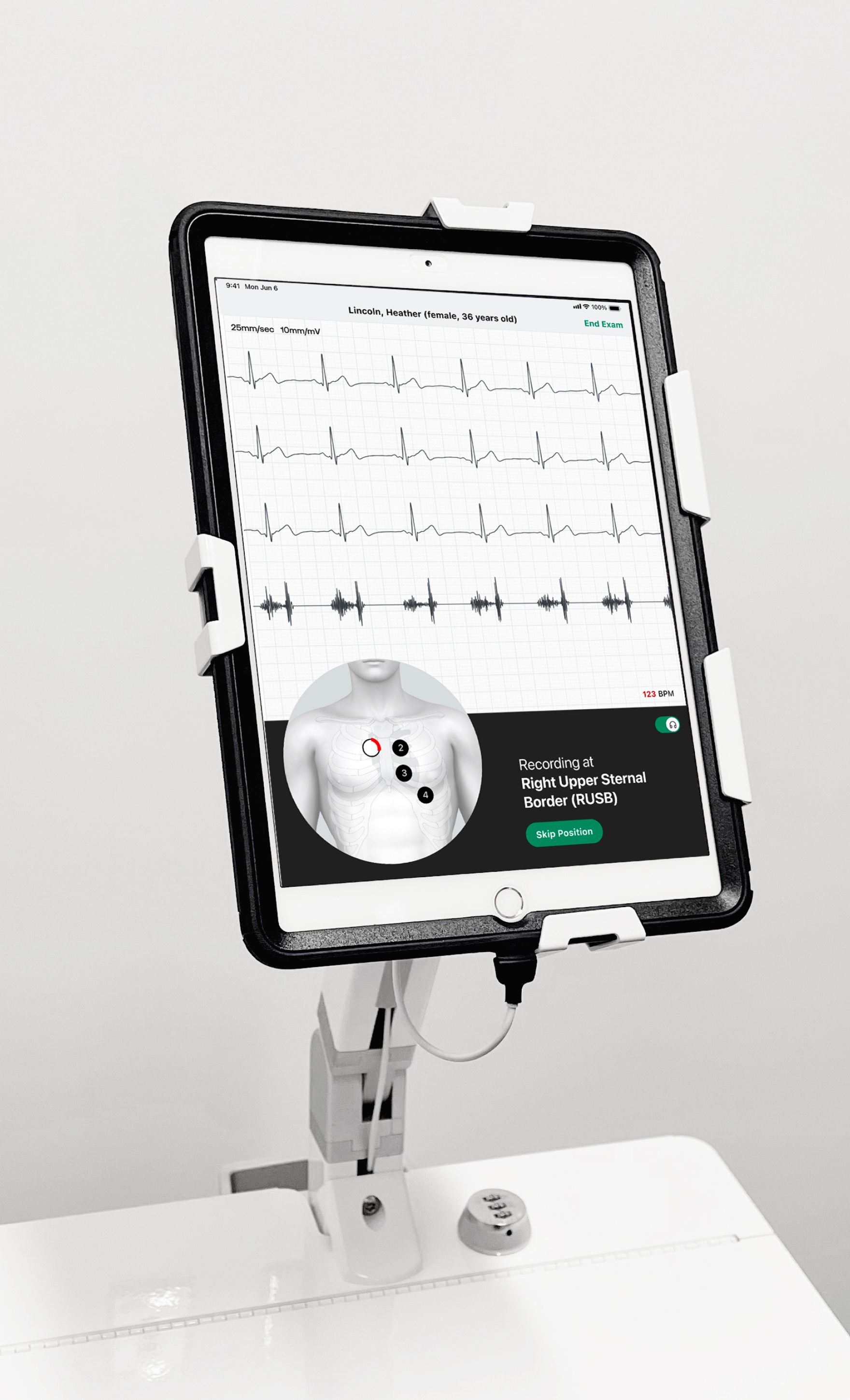
• Intuitive interfaces that amplify cardiac sounds and provide decision support within seconds.
Implementation
We partnered with clinical teams to embed the Eko platform into daily exam workflows, ensuring medical assistants and providers could use high-fidelity cardiac auscultation without disrupting existing processes.
Impact / Results
After deploying the solution, clinicians reported higher diagnostic confidence and earlier detection of disease markers that would often go unnoticed with traditional tools. In similar clinical deployments, AI-assisted screening identified structural heart disease in up to 25% of routine exams, leading to increased appropriate referrals and timely intervention.
• Increased early disease detection rates and faster referrals.
• Enhanced clinician confidence and patient satisfaction.
• Expanded access to cardiology insights in remote or rural settings.
Key Takeaways / Lessons Learned
Integrating AI into frontline clinical exams is as much about clinician confidence and workflow fit as it is about technology performance.
• Design for clinical workflows: Tools must enhance — not replace — established exam patterns.
• Clinician training matters: Adoption scales when staff understand both tech and context.
• Patient outcomes are central: Better detection improves how patients perceive value in care.
Eko’s innovation demonstrates how combining smart hardware with AI can re-envision routine clinical care — improving early detection, reducing diagnostic delay, and enabling better patient outcomes.
Process
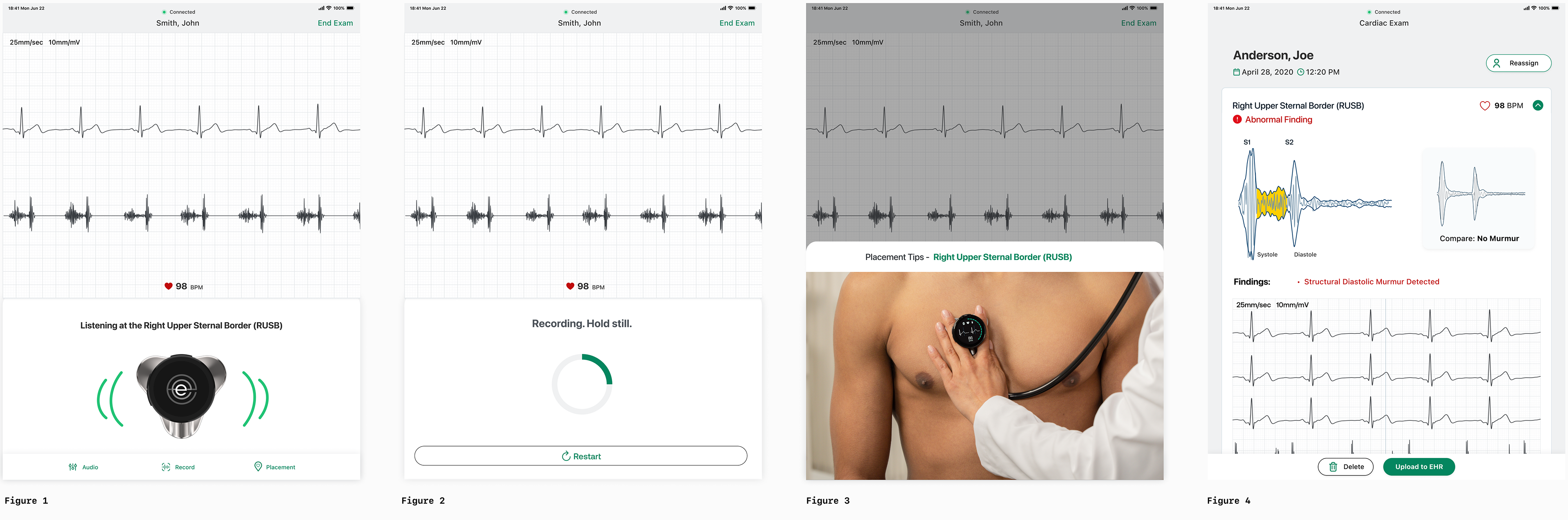
Key Usability Issues with Existing App:
• Not all users know where to place the stethoscope
• Exam takes too long and has multiple UX issues
• Summary screen is difficult to interpret
• No EHR integration
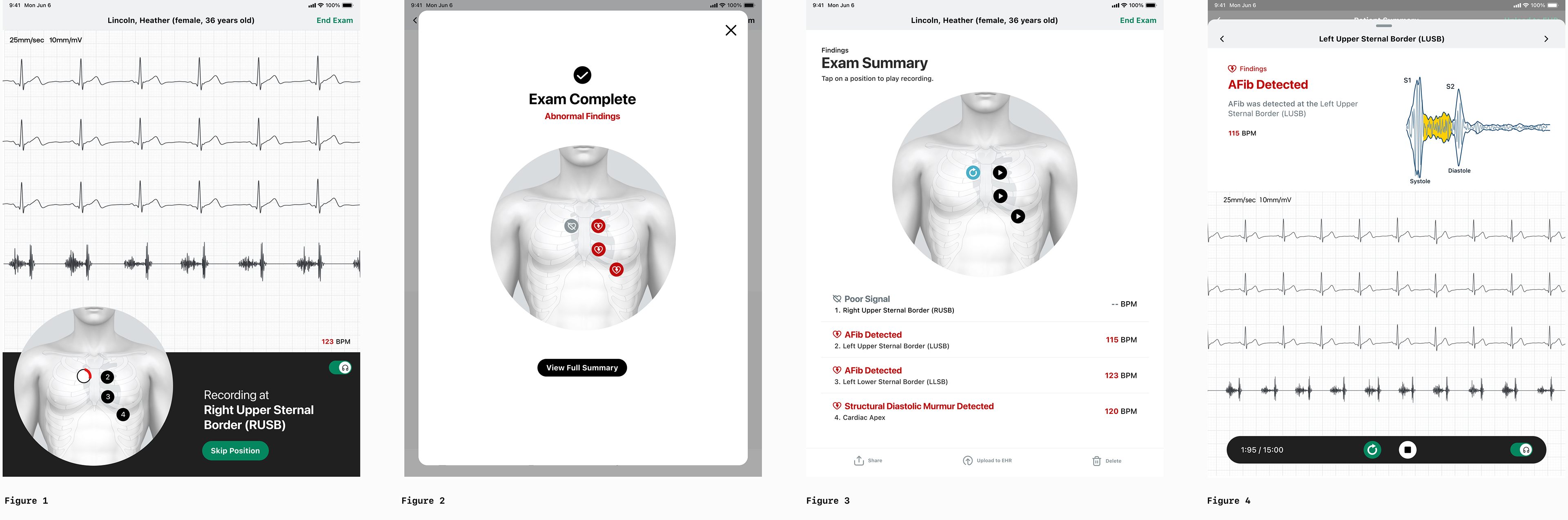
The lower half of the exam flow (Fig.1) has a lot of unnecessary cues and feels clunky. If the user selects "placement," a drawer (Fig.3) slides over the recording, interrupting the exam. Although testing validated that the user needs guidance (where to place the stethoscope), this functionality is disruptive. The image of the device (Fig.1) is not valuable. It takes up too much space. Clinicians found the summary screen (Fig.4) very difficult to read. "It's not clear what the result is. There is too much scrolling." Research showed it was not obvious that the exam was complete -users were uncertain about what to do next.
How I Solved these Design Problems (new designs):
I first assessed the space below the waveform (Fig.1). I added a visual guide for placement and combined this with the action that is currently happening (recording, listening, etc.). Clinicians were confused about when the exam was complete (this was often not a PCP, but a medical assistant not familiar with cardiac exams). To solve this, I added a modal screen (Fig.2) that notifies the user when the exam is complete. This is a simple message indicating something needs attention or results are normal. The MA can leave this screen open or view the full summary (Fig.3). This solves the "I don't know when the design is complete problem" with our users. The new summary screen is also more scannable and each position links to a more detailed summary of that recording. This detail view will launch a drawer displaying this view.
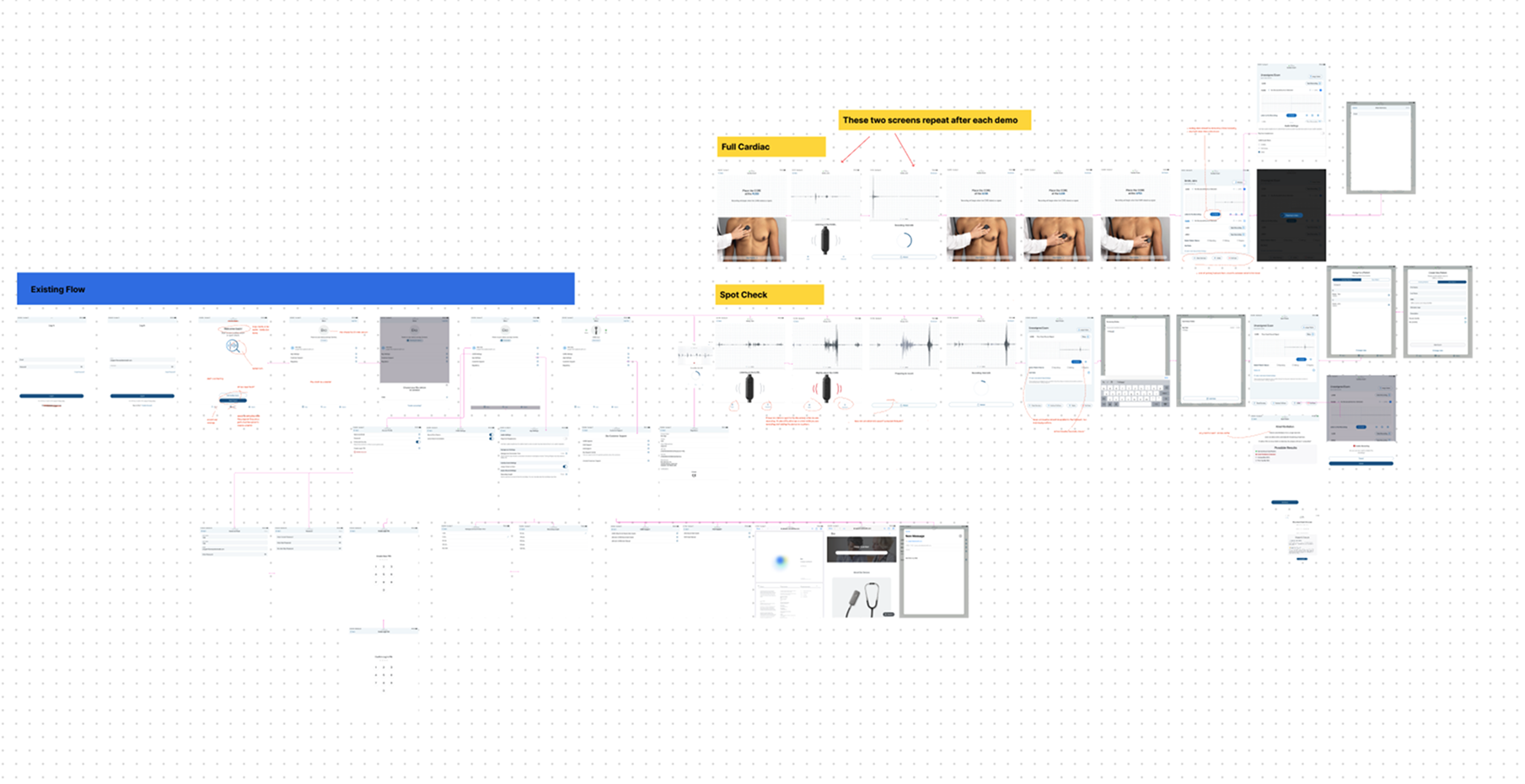
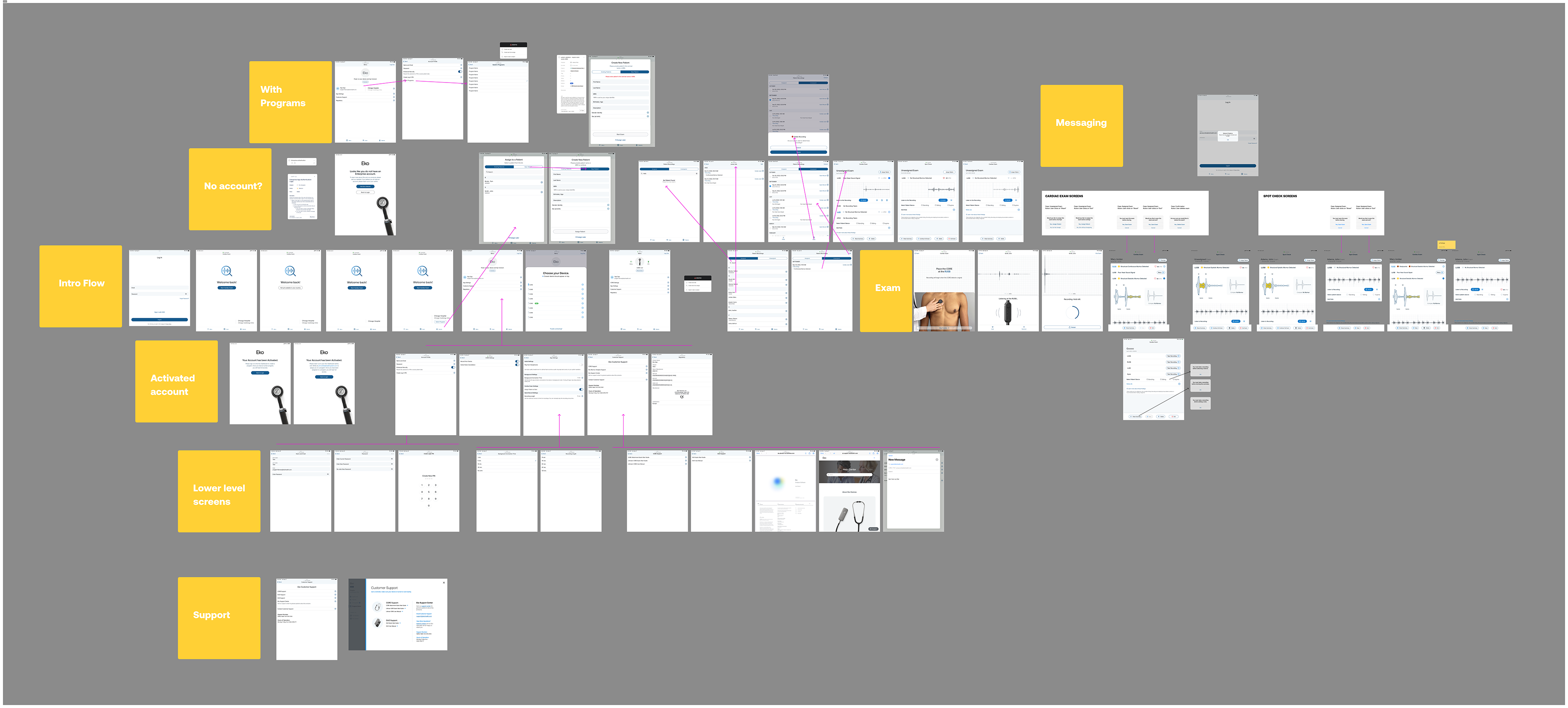
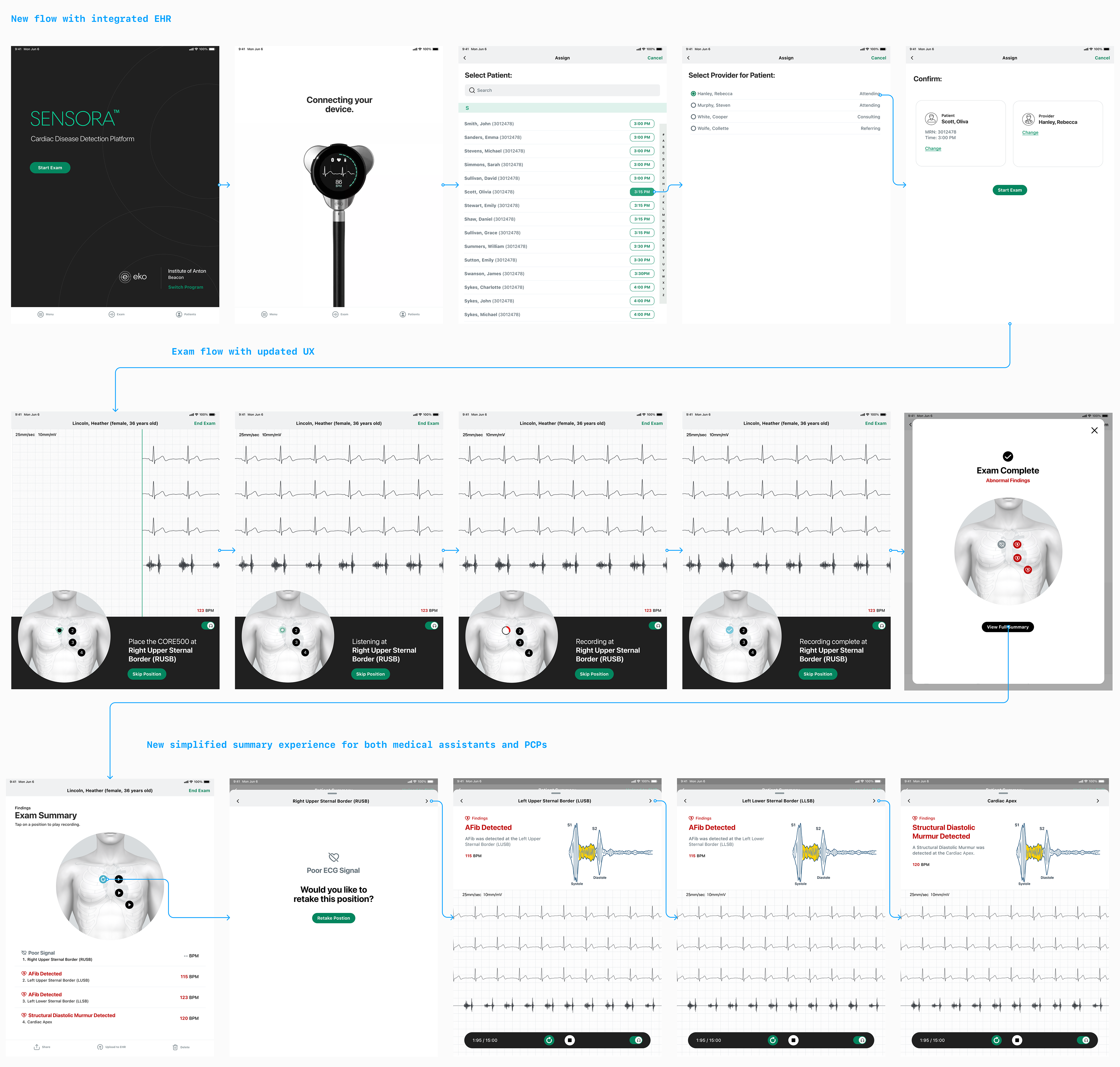
Full updated SENSORA flow:
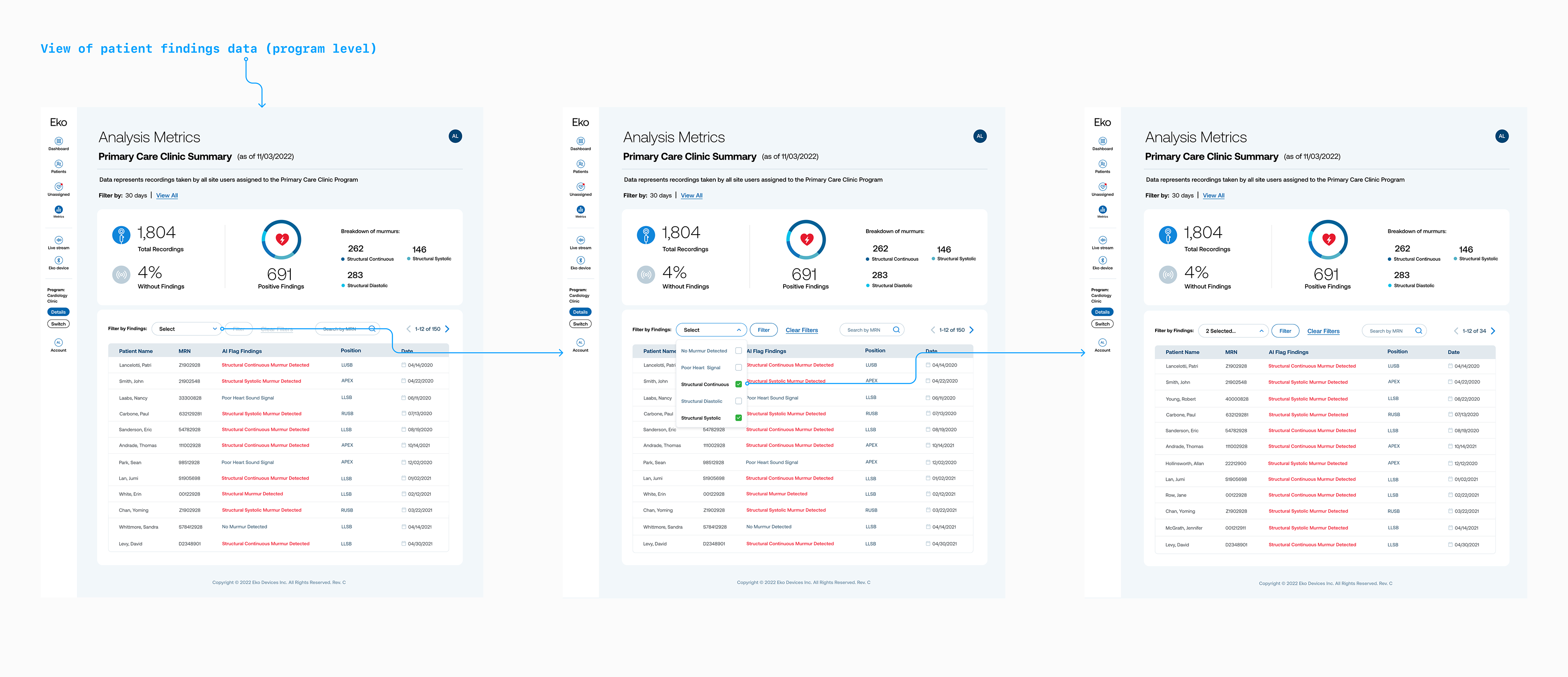
Eko Web Portal: Patient Findings Data
After an exam is taken, the patient's findings will be displayed in the web dashboard. The doctor can see a breakdown of murmur types and positive findings for their clinic.