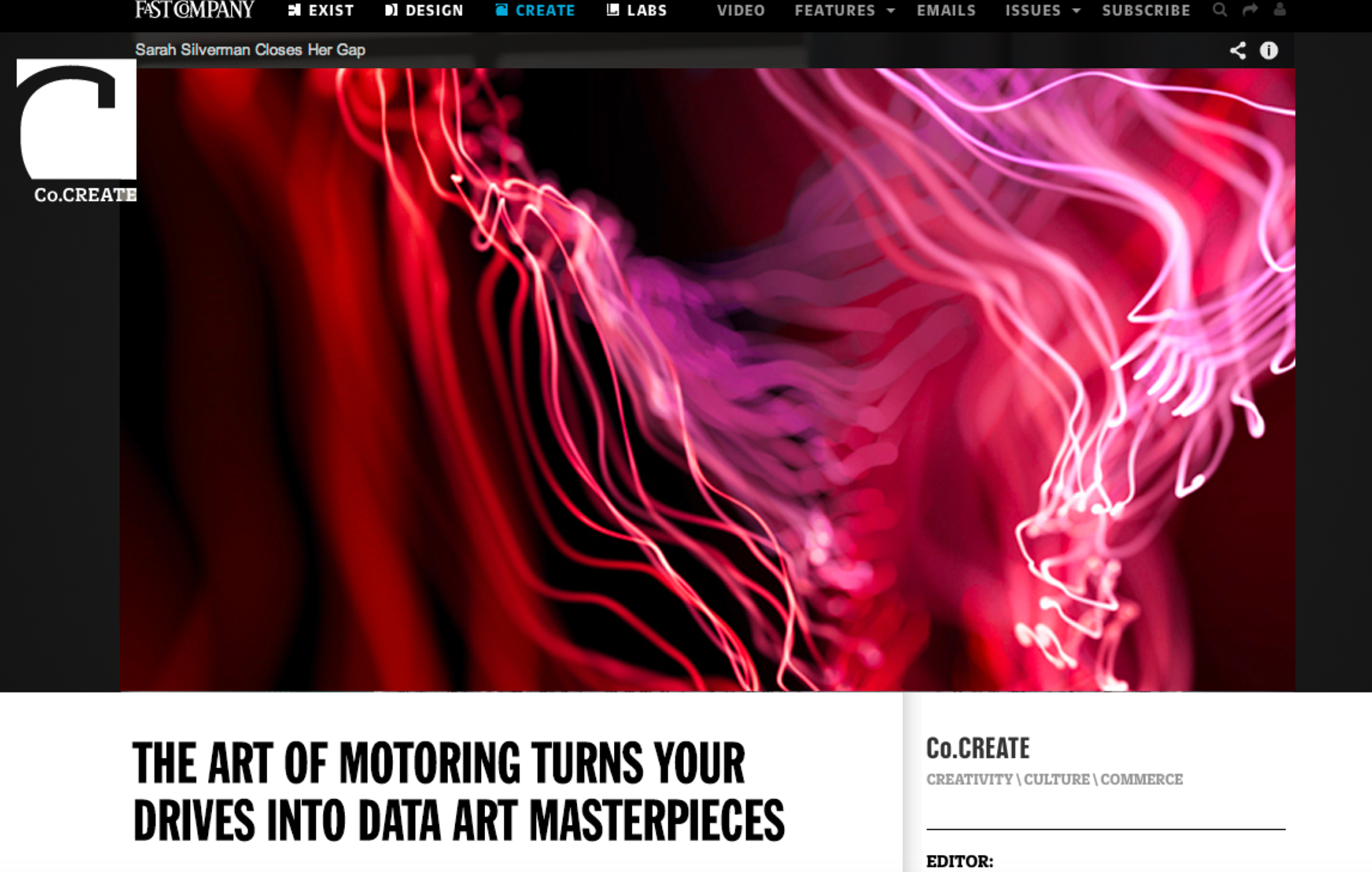
The Art of Motoring was a concept for MINI Cooper that explored how driving data could be transformed into personalized works of art. Instead of visualizing performance metrics through charts or dashboards, the project treated data as a creative medium — translating moments in motion into expressive, shareable artifacts designed for the home.
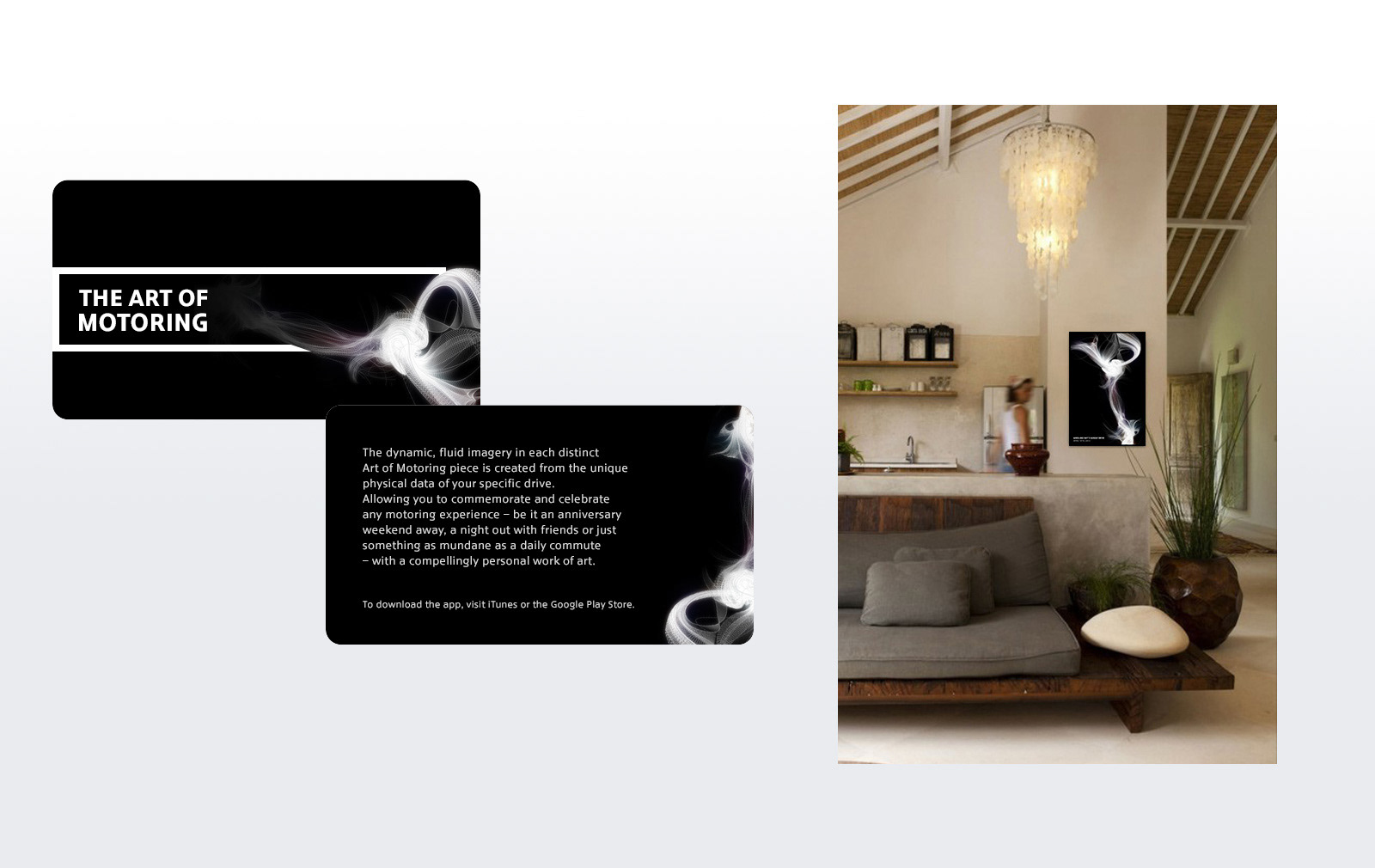
The Opportunity
Driving generates enormous amounts of data, but most of it is invisible to the person behind the wheel. The opportunity was not to summarize this data, but to reinterpret it — turning everyday telemetry into something emotional, memorable, and human.
The Idea
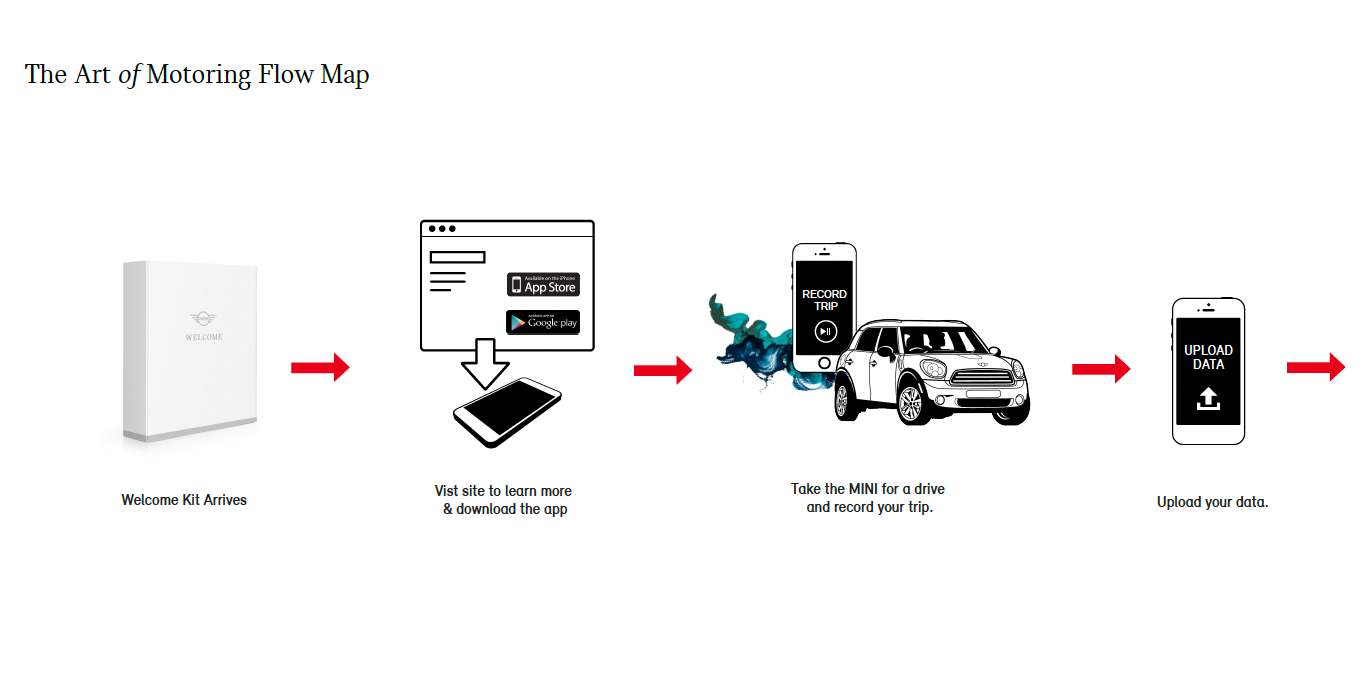
Users recorded a drive through a mobile app and uploaded the resulting data. That data was then processed to generate a unique visual composition based entirely on how and where the car was driven.
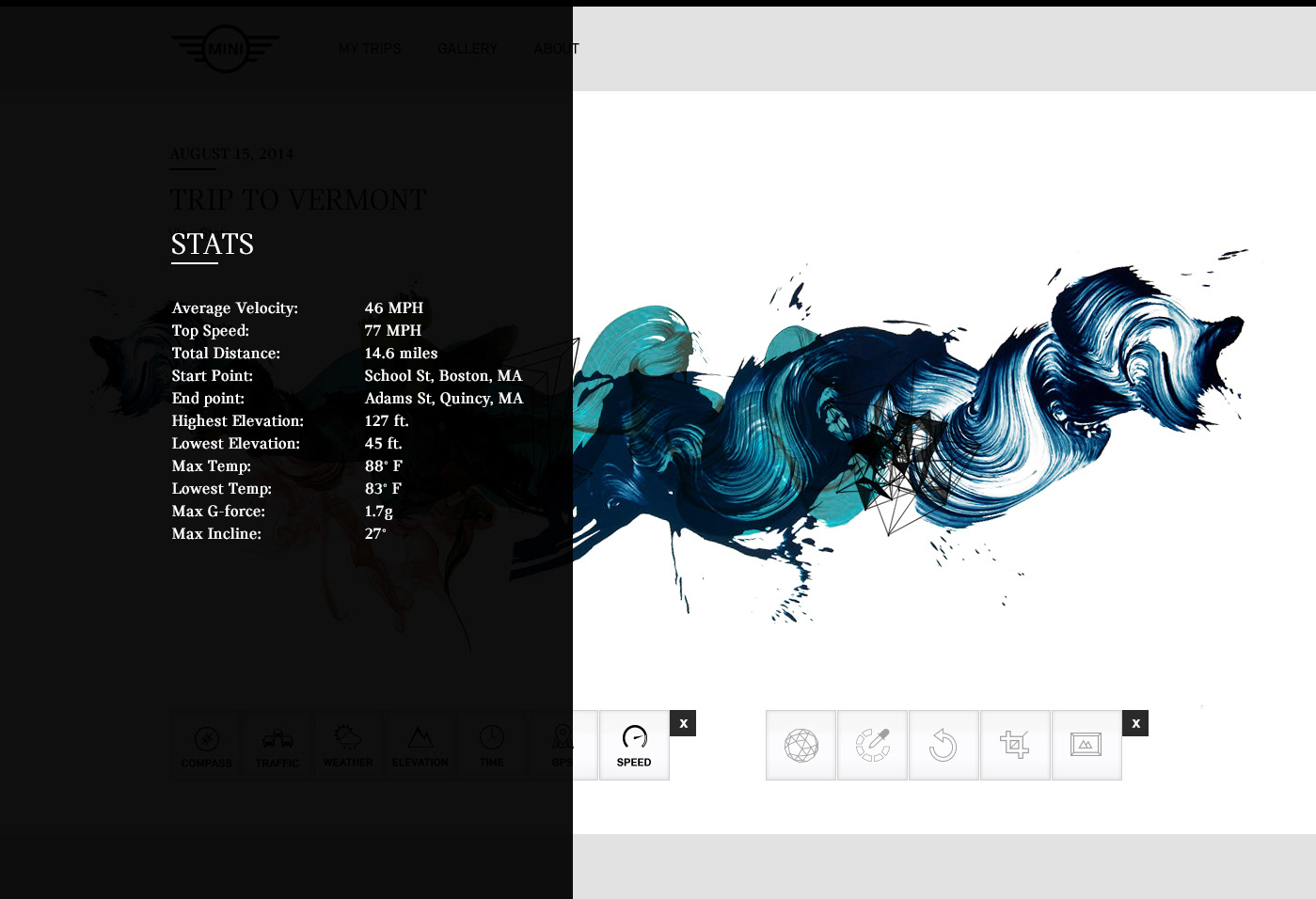
There were no charts, axes, or legends. The goal was not analysis — it was interpretation.
The System
At the core of the concept was a repeatable system:
• Input: speed, acceleration, braking, distance, duration, route
• Transformation: algorithmic rules mapping behavior to visual attributes
• Output: a personalized piece of generative artwork
Rather than designing a single visual, the focus was on designing a framework that could produce infinite outcomes from unique datasets.
Moments, not metrics
Each visualization captured a specific moment in time.
• An anniversary weekend away.
• A late-night drive with friends.
• A familiar route to the grandparents’ house.
• Or even something mundane, like a daily commute.
• A late-night drive with friends.
• A familiar route to the grandparents’ house.
• Or even something mundane, like a daily commute.
The system treated all drives equally, suggesting that even ordinary data can carry emotional value when visualized differently.
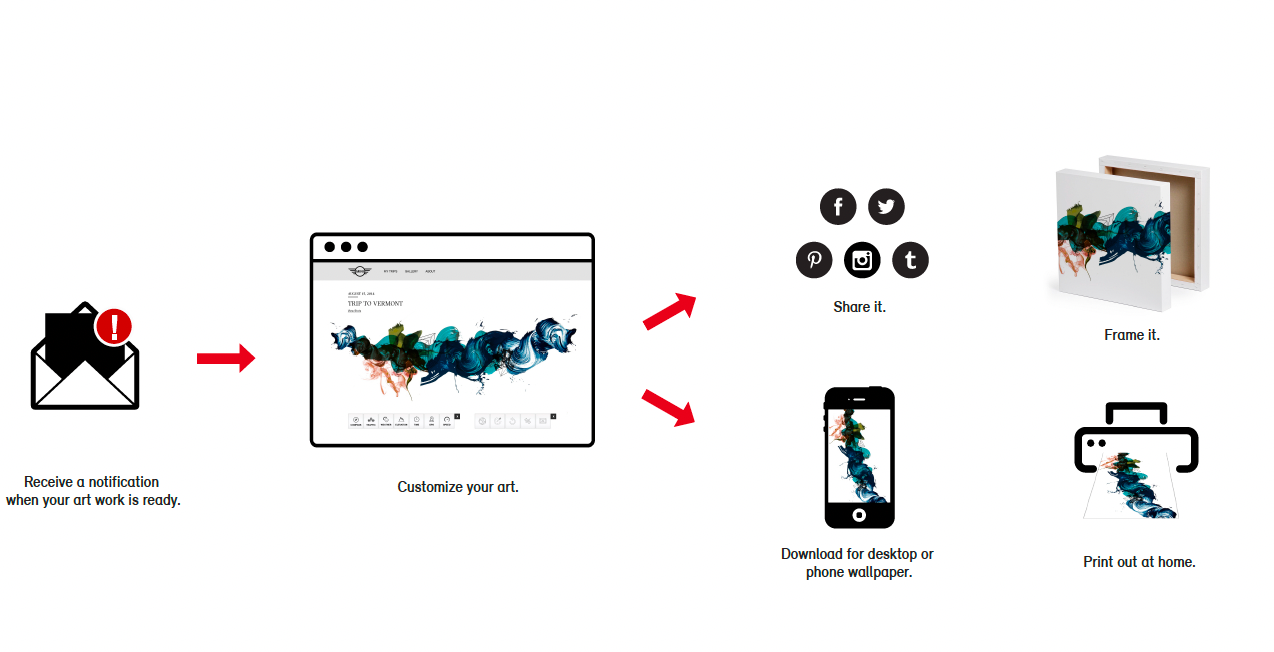
The resulting artwork became a keepsake — something to frame, share, or live with.
Customization & Creative Layers
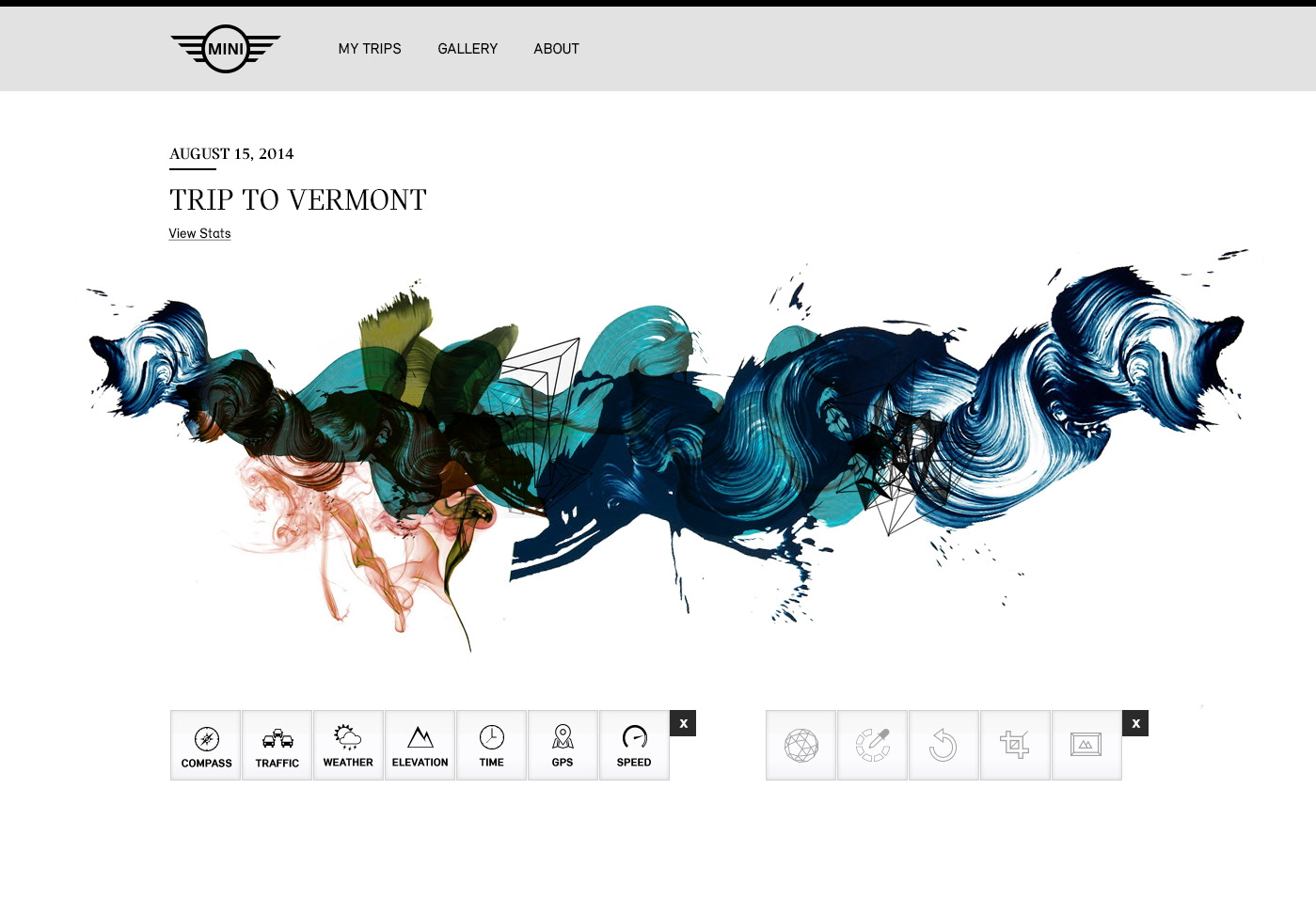
Users could personalize their artwork by selecting colors, brushes, and levels of abstraction. The same dataset could produce dramatically different results depending on individual taste.
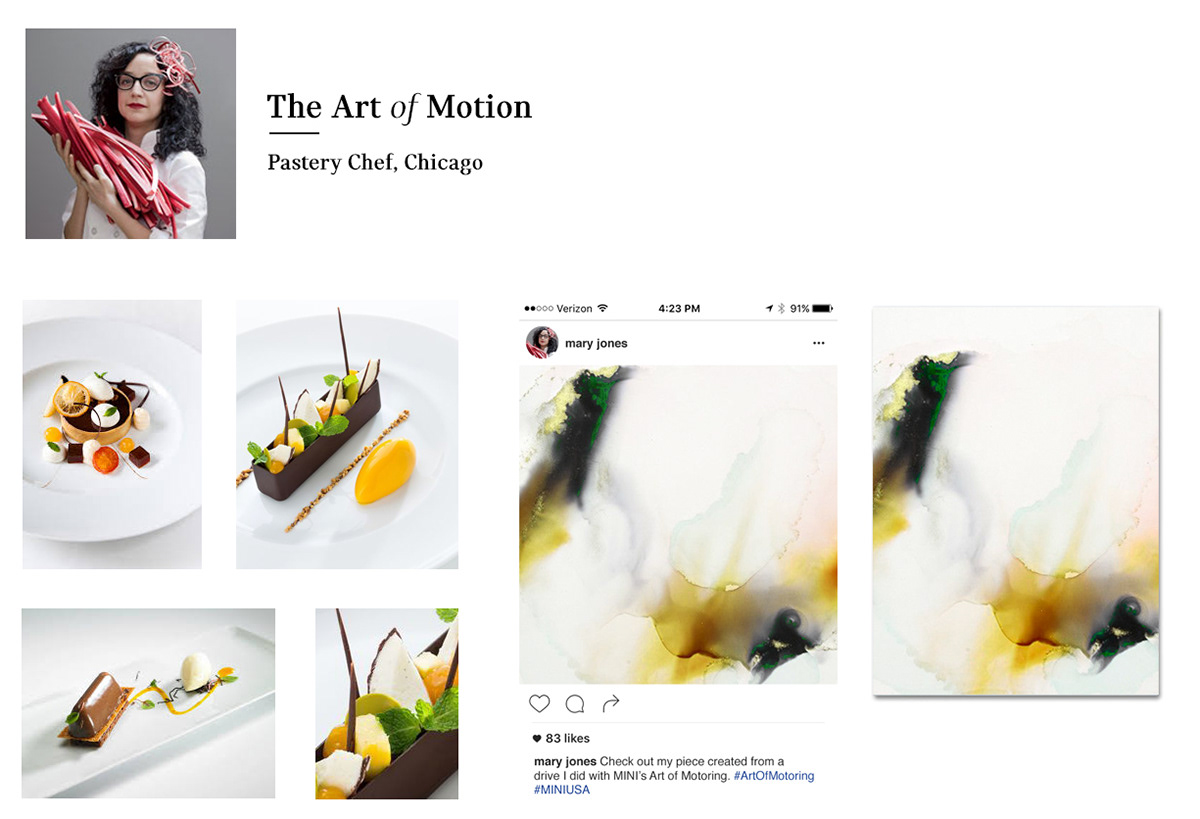
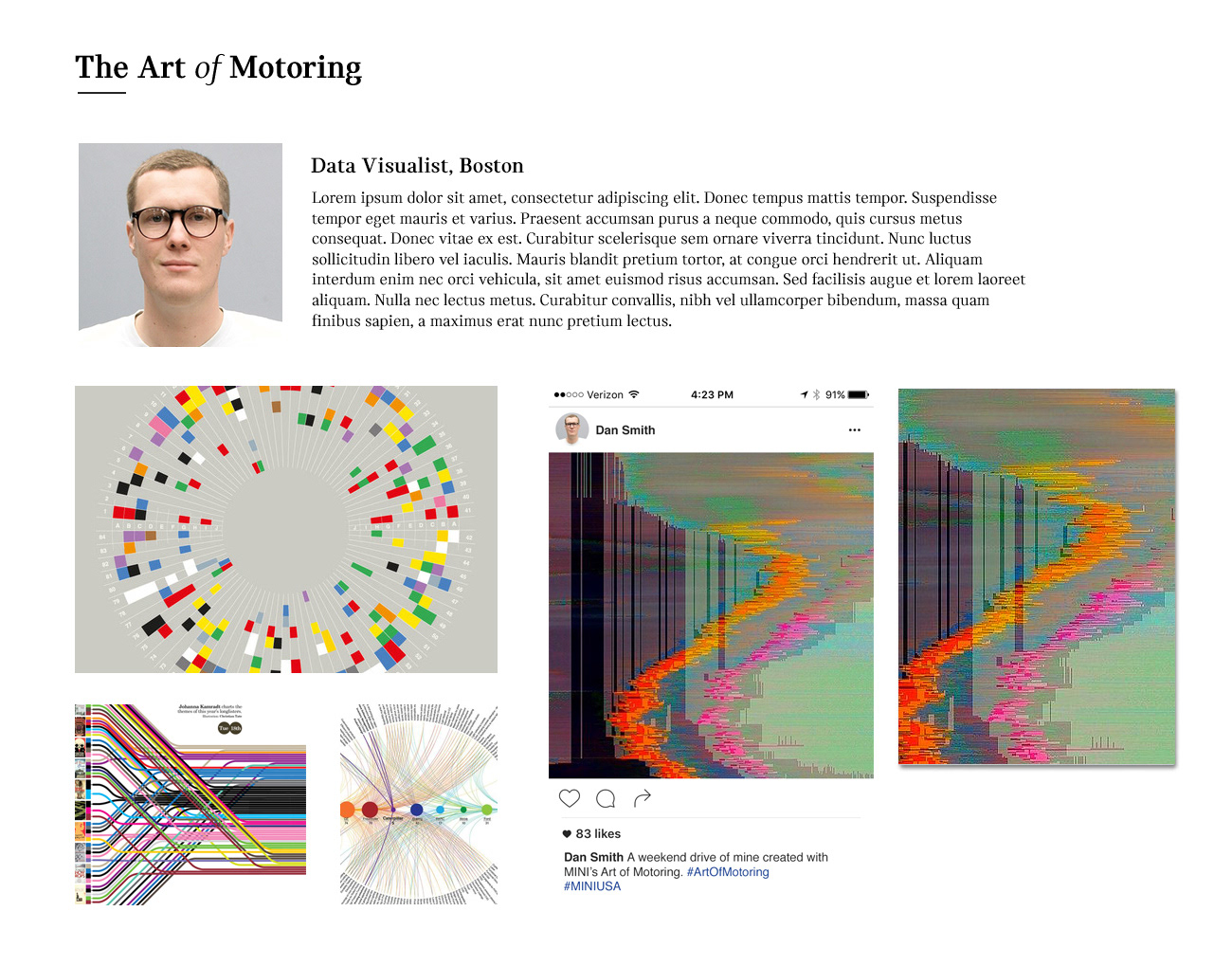
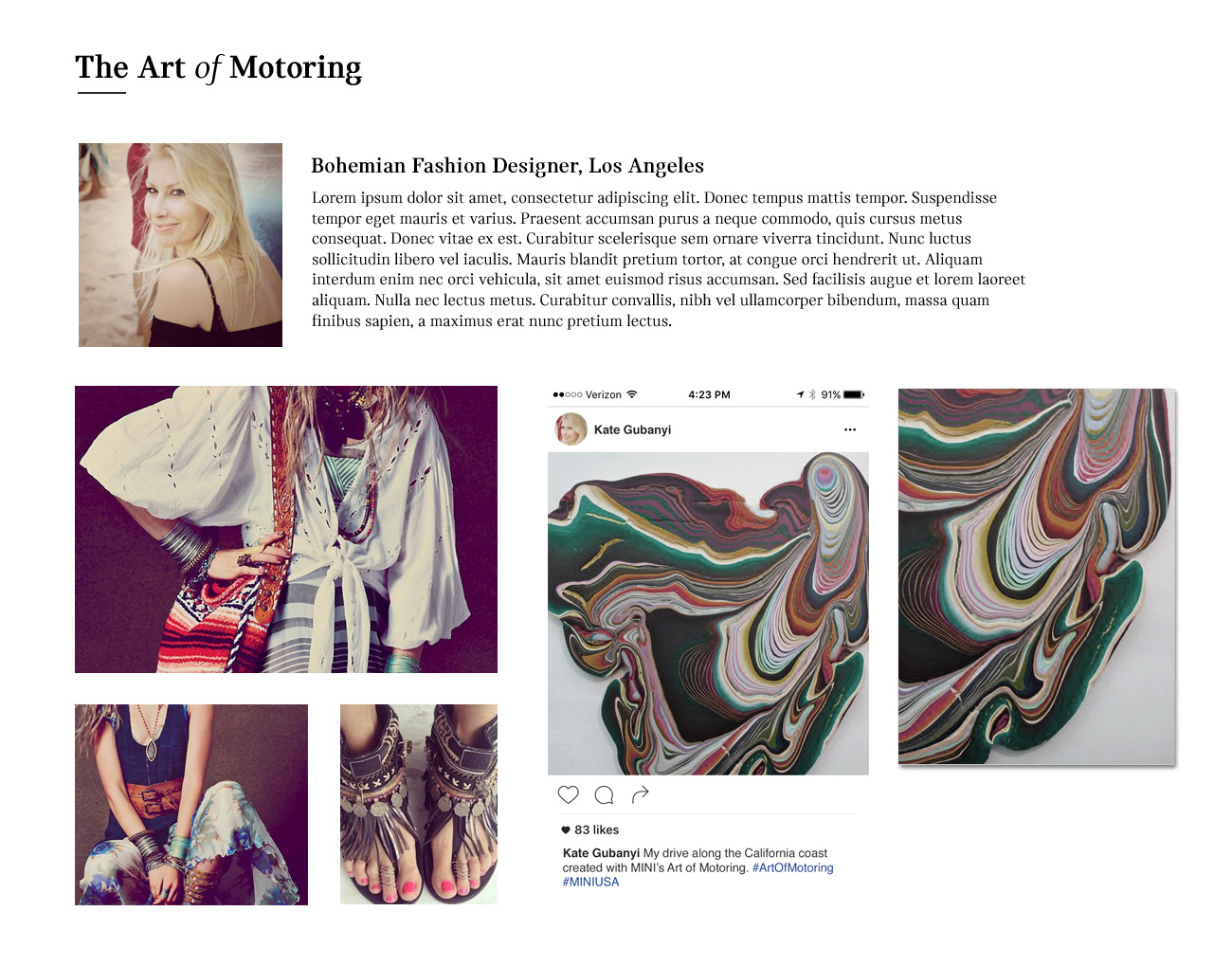
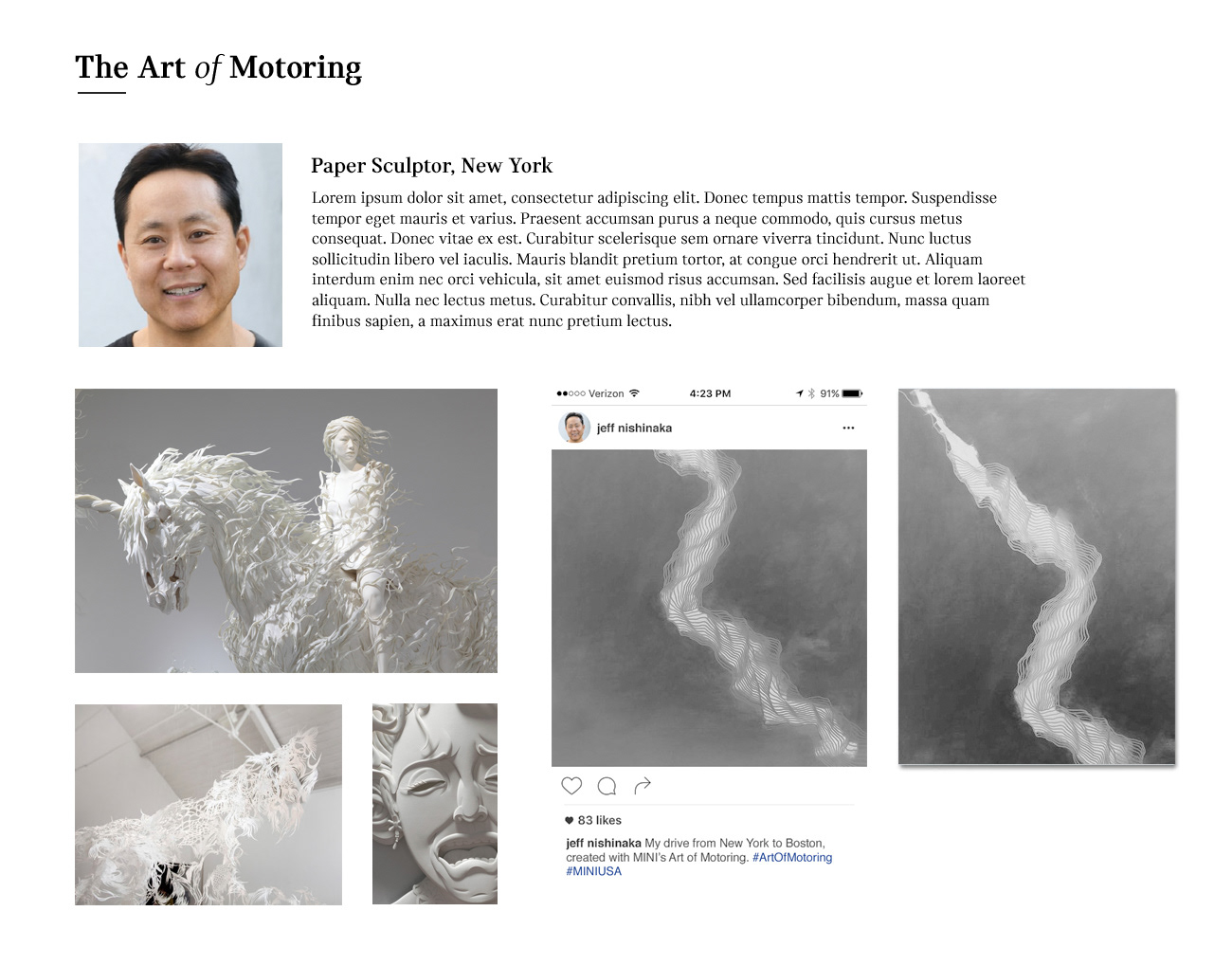
An extension of the idea explored partnerships with designers, chefs, sculptors, and artists — allowing users to reinterpret their driving data through recognizable creative styles. These collaborators could share their own generated pieces, organically extending awareness of the platform.
Beyond Charts (Looking Forward)
With today’s technology, the same system could translate driving data into multiple expressive forms:
• Motion-based visual loops (digital wall frame)
• Sculptural or 3D-printed objects
• Soundscapes or narrative interpretations (music)
Why this Matters
This project reflects a belief that data doesn’t always need to explain something. Sometimes, it needs to be felt.
The Art of Motoring shaped how I continue to think about data visualization today: not as a reporting tool, but as a creative material.

The Art of Motoring
Turning driving data into memories